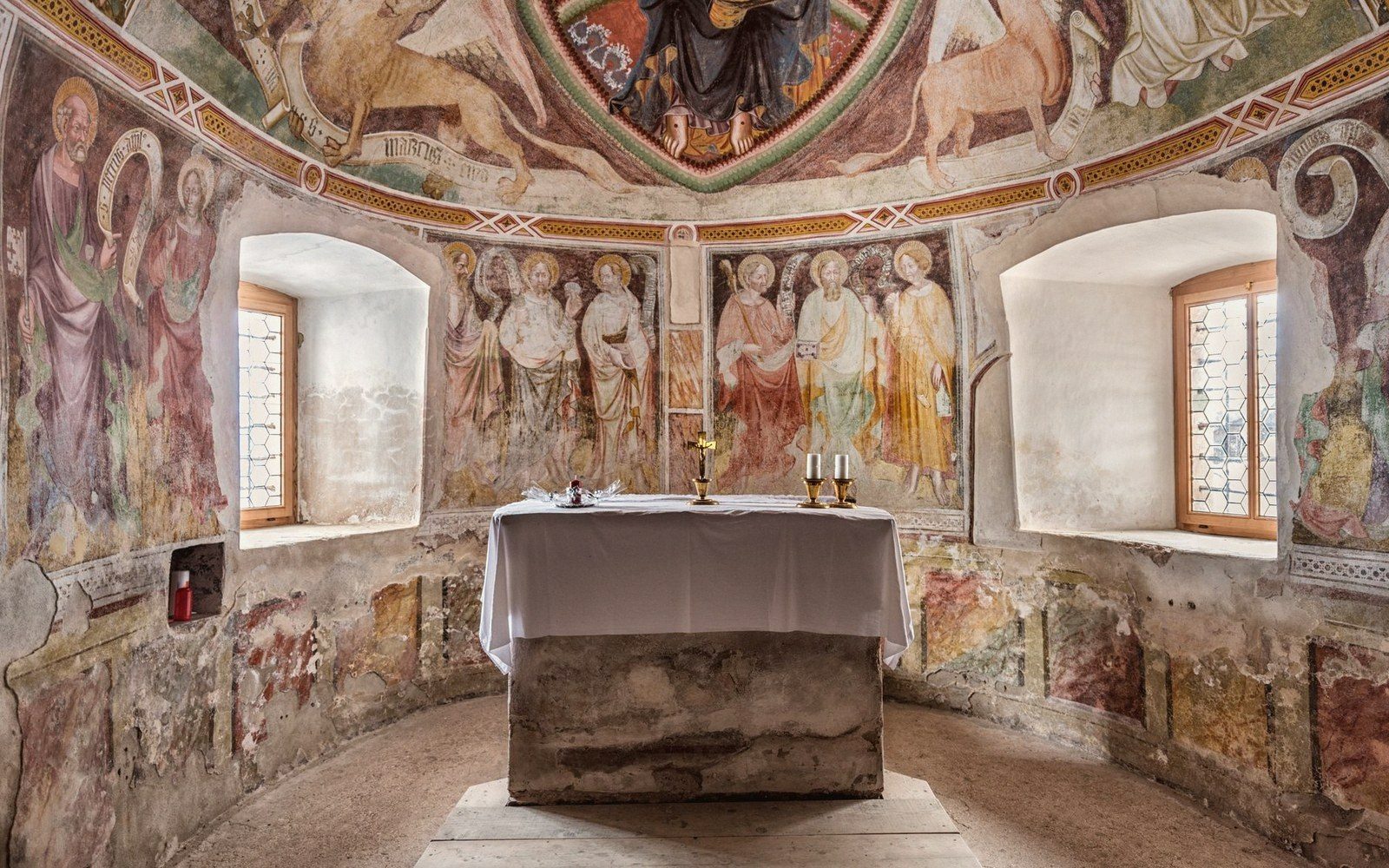
A burial chapel commission is fundamentally different from ordering a panel or a single wall. The patron is buying a space — four walls, a vault, and an altar — and everything inside it must cohere: the saints on the walls have to speak to the subject on the altarpiece, which in turn has to speak to the person buried beneath the floor. The programme, then, is not a list of pictures but a theological statement that happens to be encoded in paint and stone.
This wholeness was almost never accidental. Contracts for family chapels, such as that for the Sassetti Chapel in Santa Trinita, Florence, show patrons specifying saints with personal relevance, dedicatory subjects tied to their name-saint, and narrative cycles calibrated to what a worshipper standing at the entrance would actually see. Sightlines were not left to the painter. The patron, or the adviser drafting the contract on his behalf, had already decided which scene would be directly above the altar and which would flank it at eye level.
The altarpiece was typically the fixed point around which the fresco cycle was designed, even if the two were executed separately or by different hands. Colour carried across surfaces: a blue mantle on the altar panel needed to read against the blue drapery in the lunette above it, and a painter working in fresco — committed once the plaster was laid — could not afford to discover the conflict afterwards.
Payment structures reflected the unified scope. Advances often covered preparatory carpentry and plaster in the same instrument that named the figurative programme, binding the patron to a single coherent outlay rather than a sequence of separate negotiations. What looked like patronage of the arts was also estate planning: the chapel secured Masses for the family's souls, and the imagery was the legal face of that obligation. A saint depicted on the wall was a witness, not a decoration.
The result is that burial chapels survive as the most completely documented commissions in the archive. Because so much was at stake — salvation, family honour, perpetual liturgy — almost nothing was left to the painter's discretion.
The altarpiece was typically the fixed point around which the fresco cycle was designed, even if the two were executed separately or by different hands.