The Room Came First
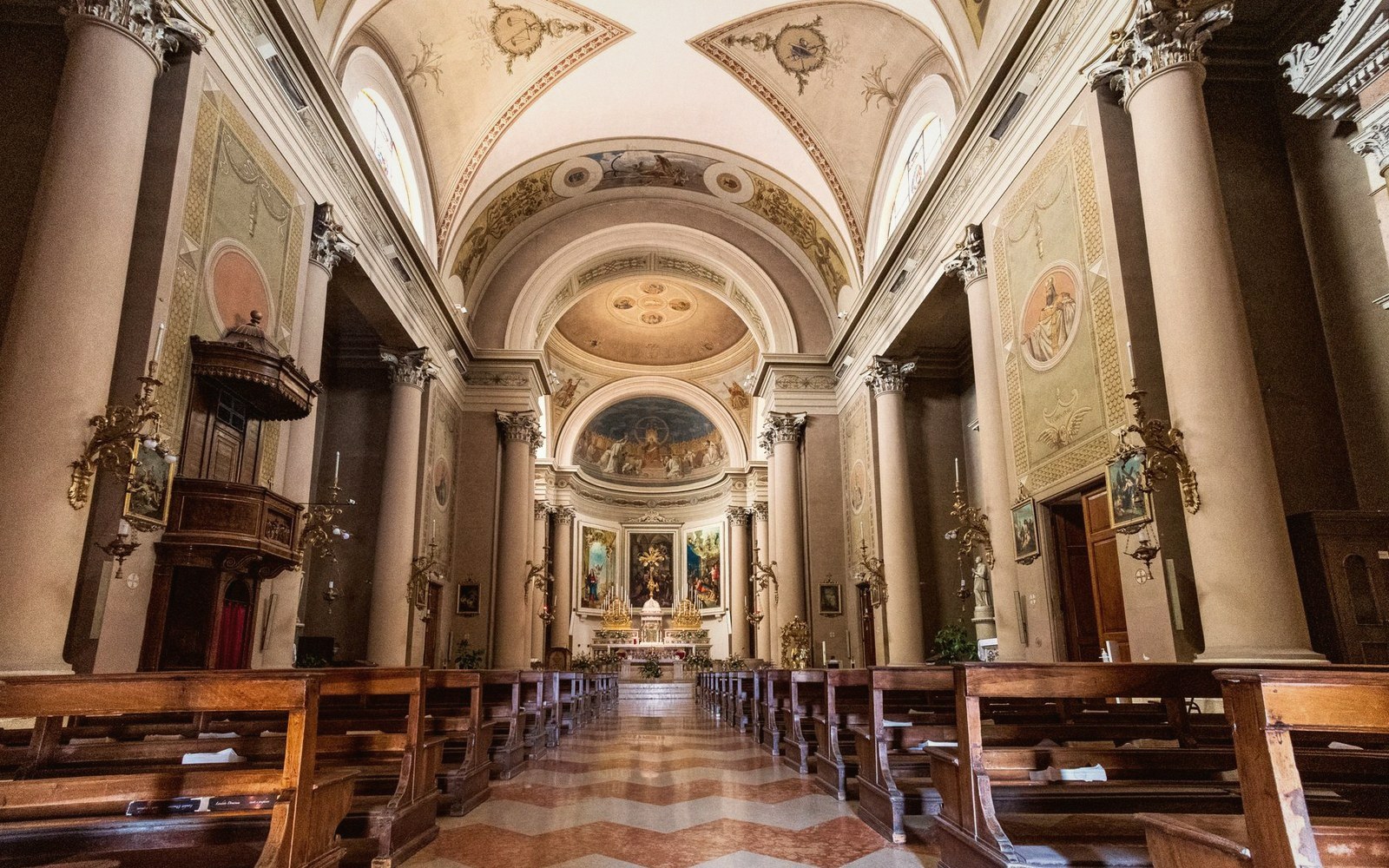
Strip away the museum lighting and the scholarly apparatus, and the basic transaction becomes clear: a confraternity, a guild or a family wanted something specific installed in a specific place, and they paid for it. The Florentine guilds did not commission Orsanmichele's programme out of civic idealism alone — each niche was a slot a guild was required to fill, and leaving it empty was a public failure of obligation. A confraternity (a lay brotherhood organised around devotion to a particular saint or holy office) met in an oratory they had built themselves, and a painted altarpiece in that space was not décor; it was the object toward which the entire meeting was oriented. A family chapel in a parish church was the room where the family's dead were buried and where the living would eventually join them. The art in it was meant to operate in that company for centuries.
This is what "local" means in this context. Not provincial — local. The patron used the space. They prayed in front of the object. They were seen in relation to it by their neighbours, their guild brothers, their business rivals. What the image looked like, what it contained, whether the figures were well-painted and the gold leaf dense enough — all of this was legible to an audience who visited the chapel regularly and knew exactly what had been spent on comparable commissions three streets away.
The Machinery Behind the Choice
Because the commission was embedded in a specific social structure, the decisions ran through that structure. A confraternity voted, or its officers decided, then a committee negotiated the contract. A guild's operai — the lay administrators appointed to manage a building or fabric fund — handled the paperwork and controlled the payments. A family patriarch authorised the work, but a chapel founded by his grandfather carried terms and obligations already written into an earlier will. The painter was often selected by reputation within a relatively tight local network: a recommendation from another confraternity, a previous altarpiece visible in the same church, a master whose workshop was in the same quarter.
The contract that emerged from these negotiations was a practical instrument, not a gesture of cultural ambition. It named the subject, listed the figures, specified the pigments — ultramarine by the ounce where the budget stretched to it — and set a penalty clause for late delivery. The patron's coat of arms usually appeared somewhere in the field; a donor portrait was common by the fifteenth century. Neither was vanity in any modern sense. They were structural: the image marked whose chapel this was, for whose souls prayers were owed, under whose patronage the altar functioned.
What This Changes About How You Look
The practical consequence for anyone standing in front of one of these works in a museum is that the object has been relocated twice over: once out of the spatial context for which every compositional decision was made, and once out of the social context that determined what those decisions had to accomplish. The sightlines were calculated for a specific nave bay or oratory wall. The scale was set against an altar table and flanking pilasters that no longer exist. The figures are at a height, in a light, and in a relationship to a viewer that the panel or fresco was designed to serve — and that viewer was not a tourist but a member of the body that paid.
Because the commission was embedded in a specific social structure, the decisions ran through that structure.
This does not diminish the works. It grounds them. The reason so much Italian painting of the fourteenth, fifteenth and sixteenth centuries is so formally accomplished is partly that the patrons were exacting, knowledgeable, and in the room often enough to complain. The contract was the mechanism; the chapel was the reason; and the patron was, before everything else, a local stakeholder with a very specific wall to fill.
Sinopia is an independent publication about art patronage and workshop practice. It is not a competitions body, gallery, dealer or advisory service.