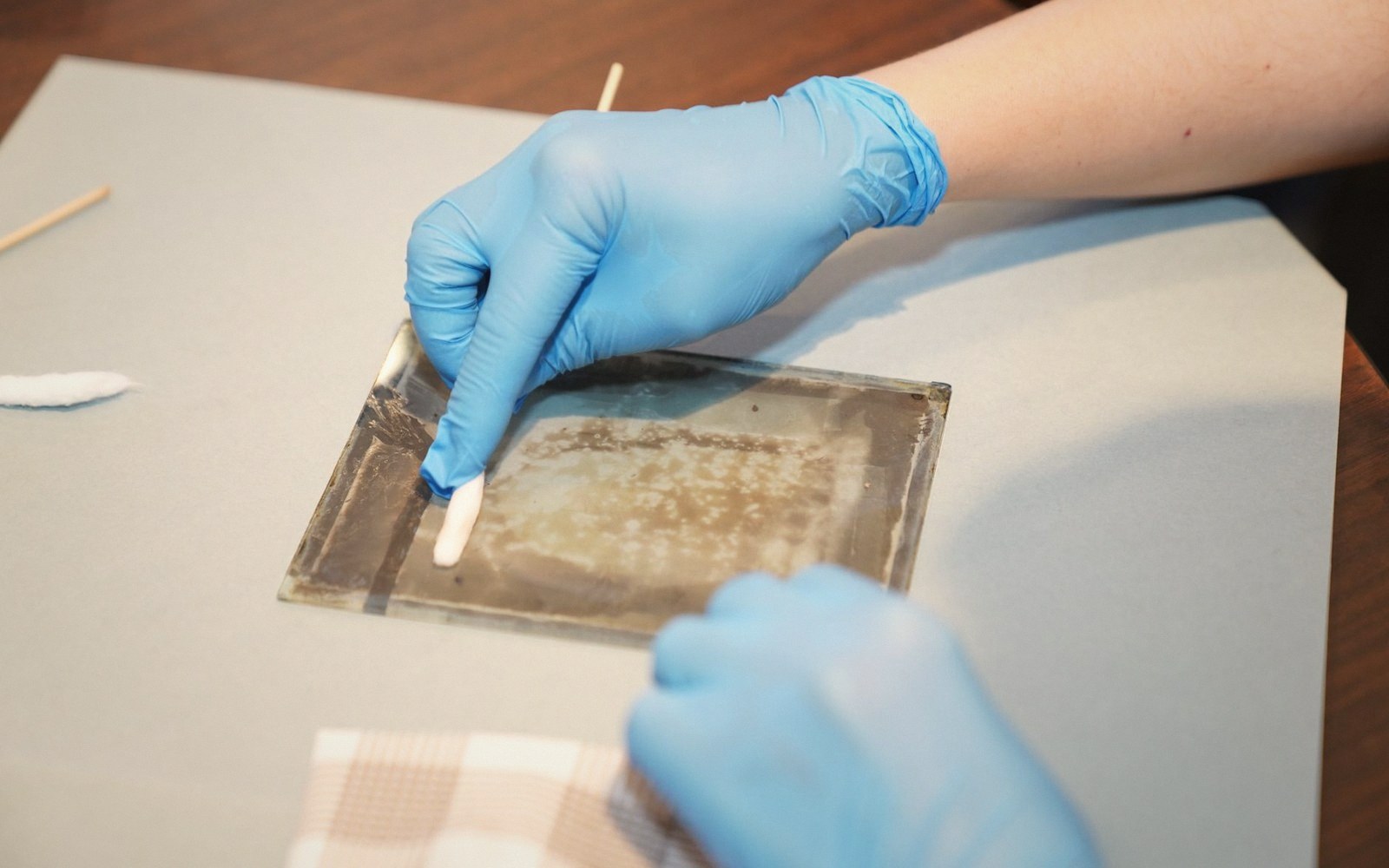
True fresco — buon fresco — works because the pigment is absorbed into the wet plaster as it carbonates. The lime locks the colour chemically into the wall itself. But only a limited range of pigments can tolerate that strongly alkaline environment. Everything else had to wait until the plaster had dried, then be applied with a binder — egg, glue, casein — over the hard, inert surface. This is a secco (literally "dry") painting.

The list of pigments that cannot survive wet lime is also a list of the most visually important colours in a medieval or Renaissance palette. Organic reds like lake, made from kermes or brazilwood, were alkali-sensitive. So was lead white, applied a secco for modelling highlights. Azurite, the standard mid-priced blue pigment, degraded in lime; it was laid over a dried wall, which is why it has flaked from so many Trecento and Quattrocento frescoes, leaving only the dark underpaint. Ultramarine, paradoxically, was lime-stable, but it was often applied a secco anyway for a second, richer layer — adding depth to an area already blocked in with a lime-compatible earth.
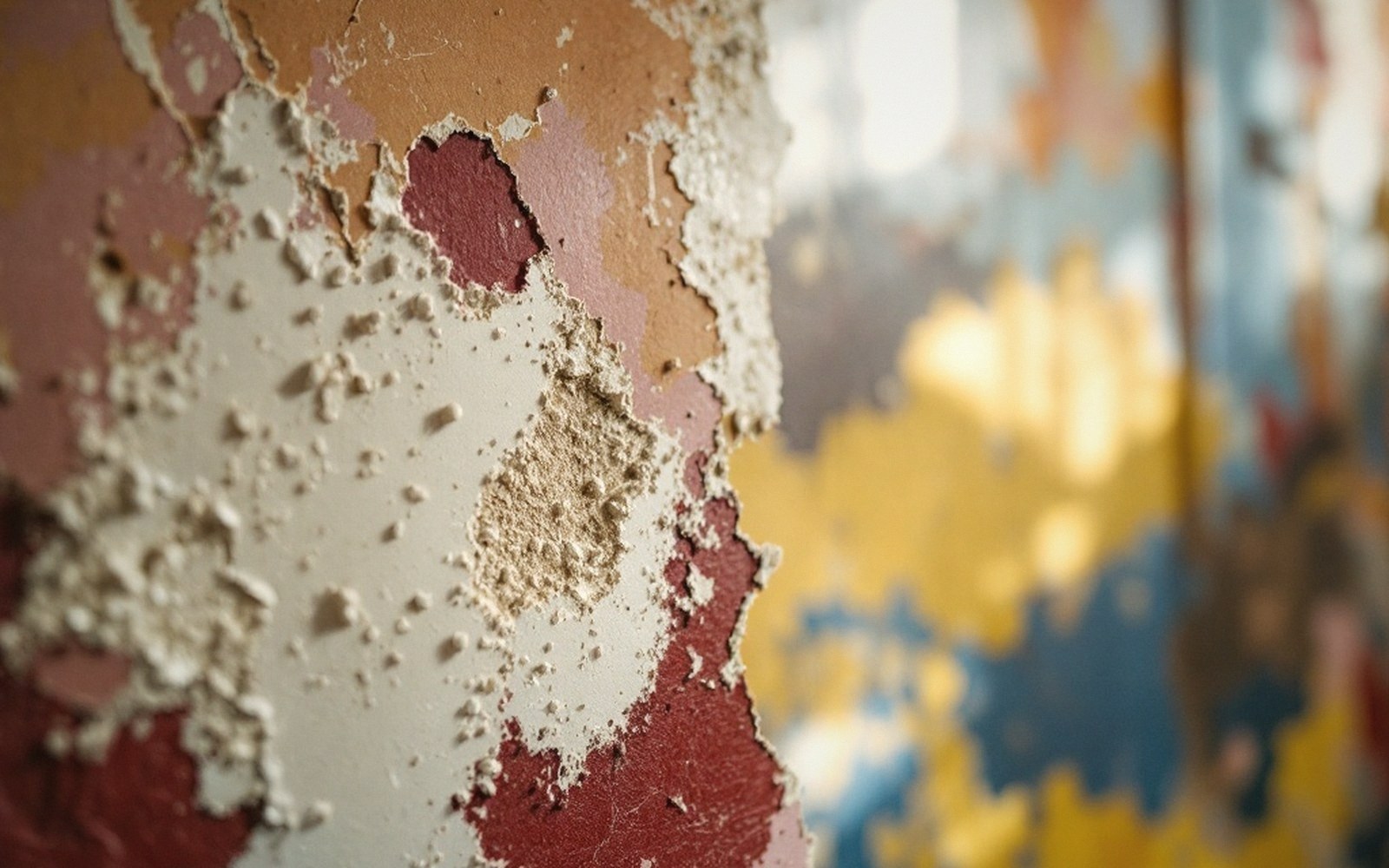
The practical consequence is structural. A secco paint sits on the surface, held there only by its binder. Buon fresco is the wall. When humidity cycles, when the plaster breathes, when water works behind the surface, the a secco layer is the first to lift, blister and drop away. Restorers working on detached frescoes, or simply on walls that have endured centuries of weather and candle smoke, consistently find that what remains is the intonaco — the final plaster coat — with its integrally carbonated palette of earth tones and iron oxides. The greens, reds and blues that completed the image are frequently gone.
This matters for how we read the surviving object. The solemn, restricted palette of many Romanesque and early Gothic frescoes is partly an original aesthetic; it is also partly what the chemistry spared. A cycle that reads today as austere ochre and terra verde may once have been loud with applied red and azurite or ultramarine blue. The giornata — the day's patch of fresh plaster — governed what could be bonded into the wall; everything beyond that boundary was provisional from the moment it dried.
When a contract specified that a painter was to use buono azzurro, or "fine blue," it was often anticipating an a secco application. The specification was a material guarantee. The patron knew the colour would go on dry, and wanted to be sure it was the expensive kind before it inevitably, eventually, fell off.