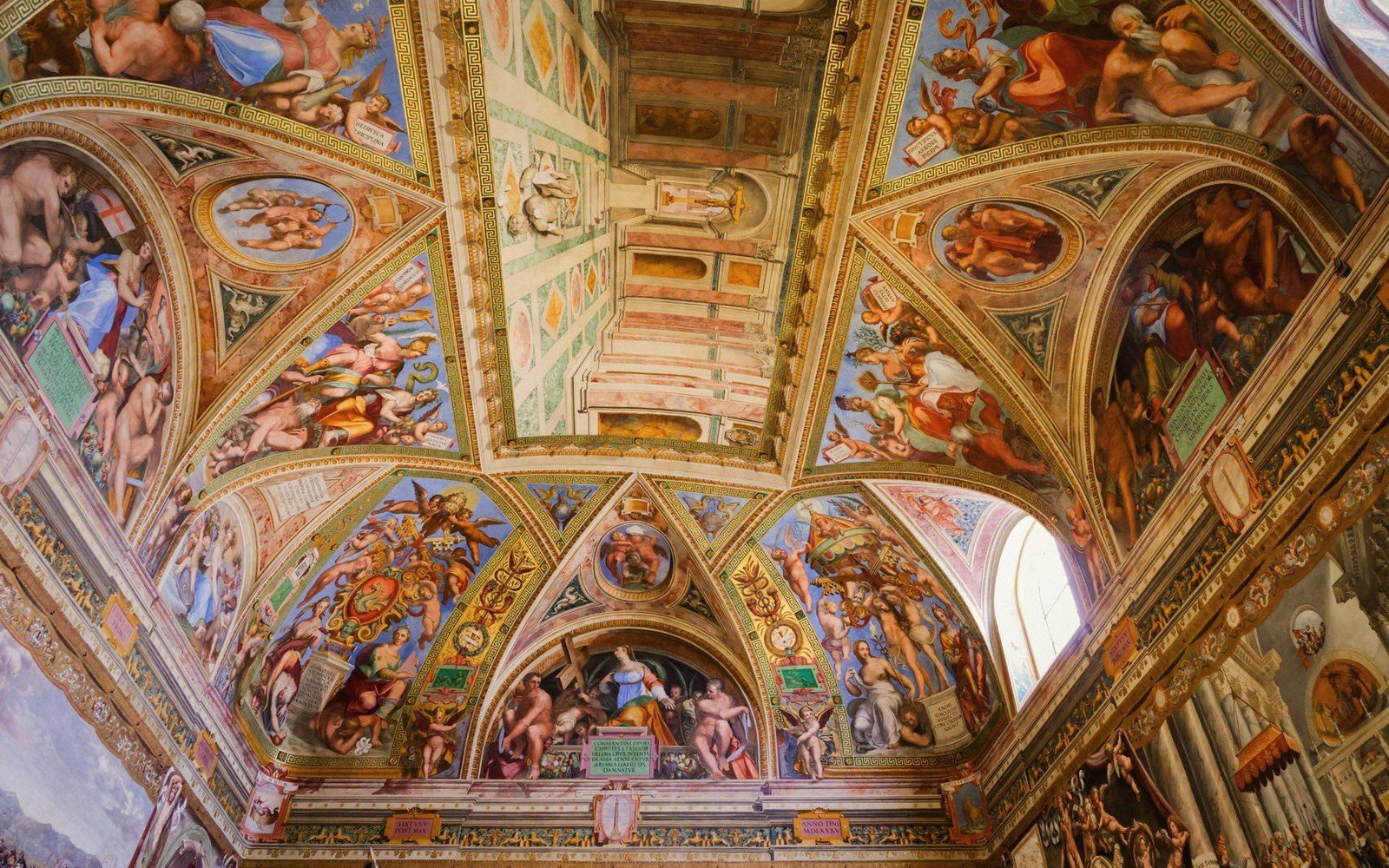
The contract is not background information. It is the primary document. A signed agreement between patron and painter specified the subject and the figures within it, the dimensions of the panel or the wall area to be covered, the materials down to the grade of blue, the delivery date, the price, and what happened if the painter missed any of it. Reading one tells you more about how a painting came to exist than most catalogue entries will ever attempt.

This was not the exception. It was the structure of the entire market. Painters did not generally produce work and then look for buyers. They worked to order, responding to a stated need — a burial chapel to decorate, an altarpiece required above a specific altar, a confraternity wanting its patron saint made visible on a wall it owned. The commission was the unit of production. Before the contract was signed, almost nothing happened; once it was signed, almost everything was determined.
The patron's side of the agreement was not merely financial. Patrons specified iconography: which saints appeared, in what positions, wearing what colors. They specified materials: ultramarine from lapis lazuli was expensive enough that its quantity was sometimes capped by the ounce, with cheaper azurite permitted in areas the patron deemed secondary. They specified whose hand would do the work — a clause requiring the master to paint the principal figures himself was common enough to be a near-standard insertion, because the workshop system meant that assistants might otherwise complete large portions of a commission. And they specified time, usually with a financial penalty attached.
The painter's side was the guarantee of craft. A master signing the contract put his reputation behind the work in a concrete, legally enforceable sense. If the panel warped because the carpentry was his responsibility, or if the colors faded because he had substituted a cheaper binder, he could be made to answer for it. Arbitration — a named third party, often a fellow painter or a notary — was built into many agreements as the mechanism for resolving exactly these disputes. The contract anticipated failure as a real possibility and made provision for it.
What this means for the paintings that survive is significant. The choices visible on the surface — why a particular blue appears in the Virgin's robe and not elsewhere, why the gold leaf is confined to certain zones, why one face is painted with more descriptive detail than the figures beside it — are often not aesthetic choices in the autonomous sense. They are the visible consequences of a negotiated document. The costly materials were placed where the contract required them to be placed, and the master's hand went where the clause told it to go.
This also means that the contract is a social document as much as an economic one. Patronage was local before it was anything else: the commissioning body was typically a family, a guild, a confraternity, or a civic institution with a specific location and a specific devotional need. The painting was made for a room, a wall, a niche — not for a neutral space, and certainly not for a future museum. The contract records that intention. It records who wanted the thing, why they wanted it, what they were prepared to pay, and what standard of execution they considered acceptable.
This also means that the contract is a social document as much as an economic one.
Almost nothing in the Italian canon arrived without this machinery behind it. The great cycles, the celebrated altarpieces, the frescoed vaults — each one began with a document that named a patron, named a painter, and set the terms on which the work would be judged done. Reading the contract does not diminish the painting. It explains it, and it returns to the surface all the pressures, negotiations and constraints that the genius narrative quietly erases.