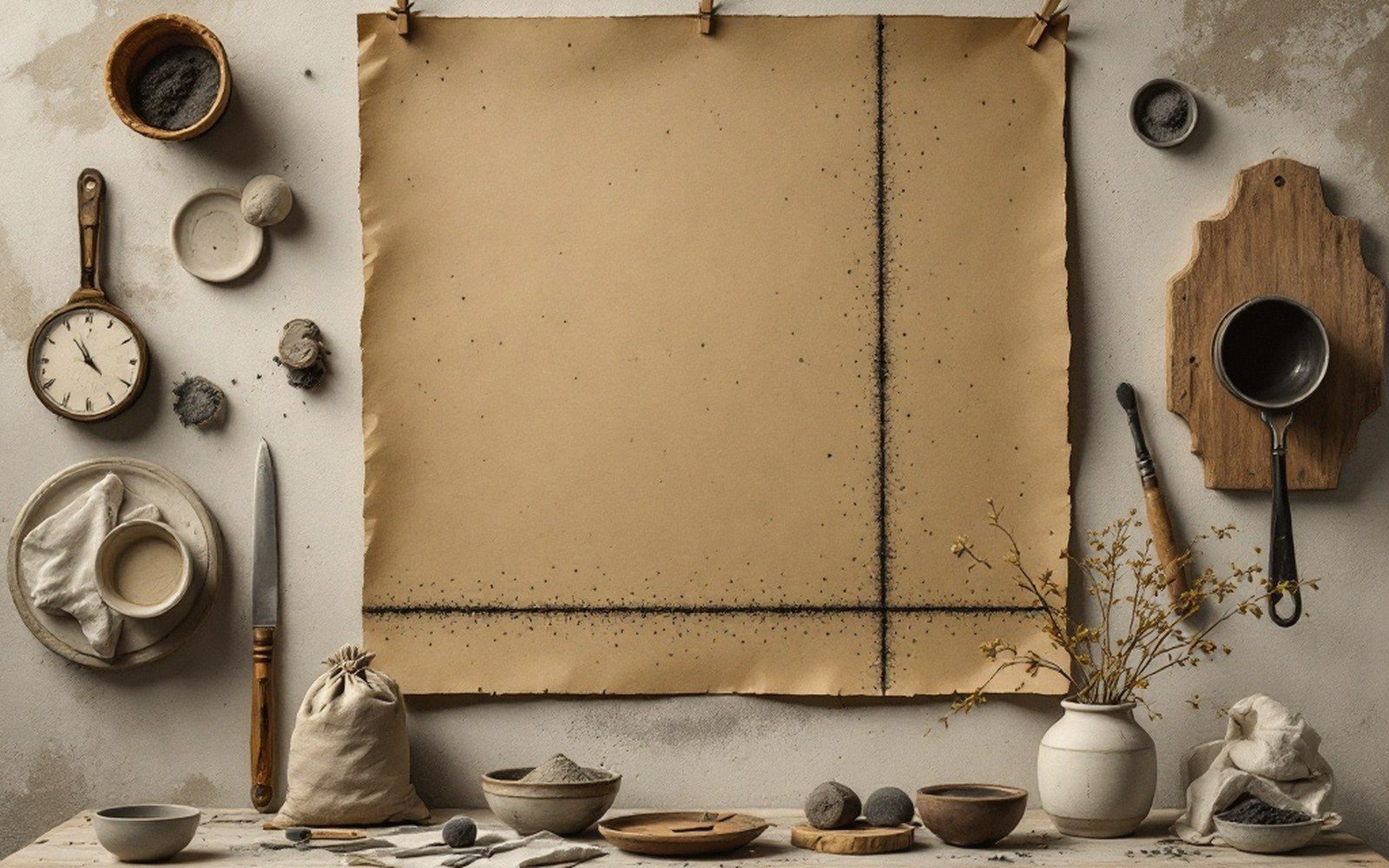
A cartoon — from the Italian cartone, meaning a large sheet of paper or card — was not a preliminary sketch. It was a full-scale drawing, exactly the size of the finished work, made specifically to transfer an outline to the painting surface. Where the sketch belonged to the design phase, the cartoon belonged to production.
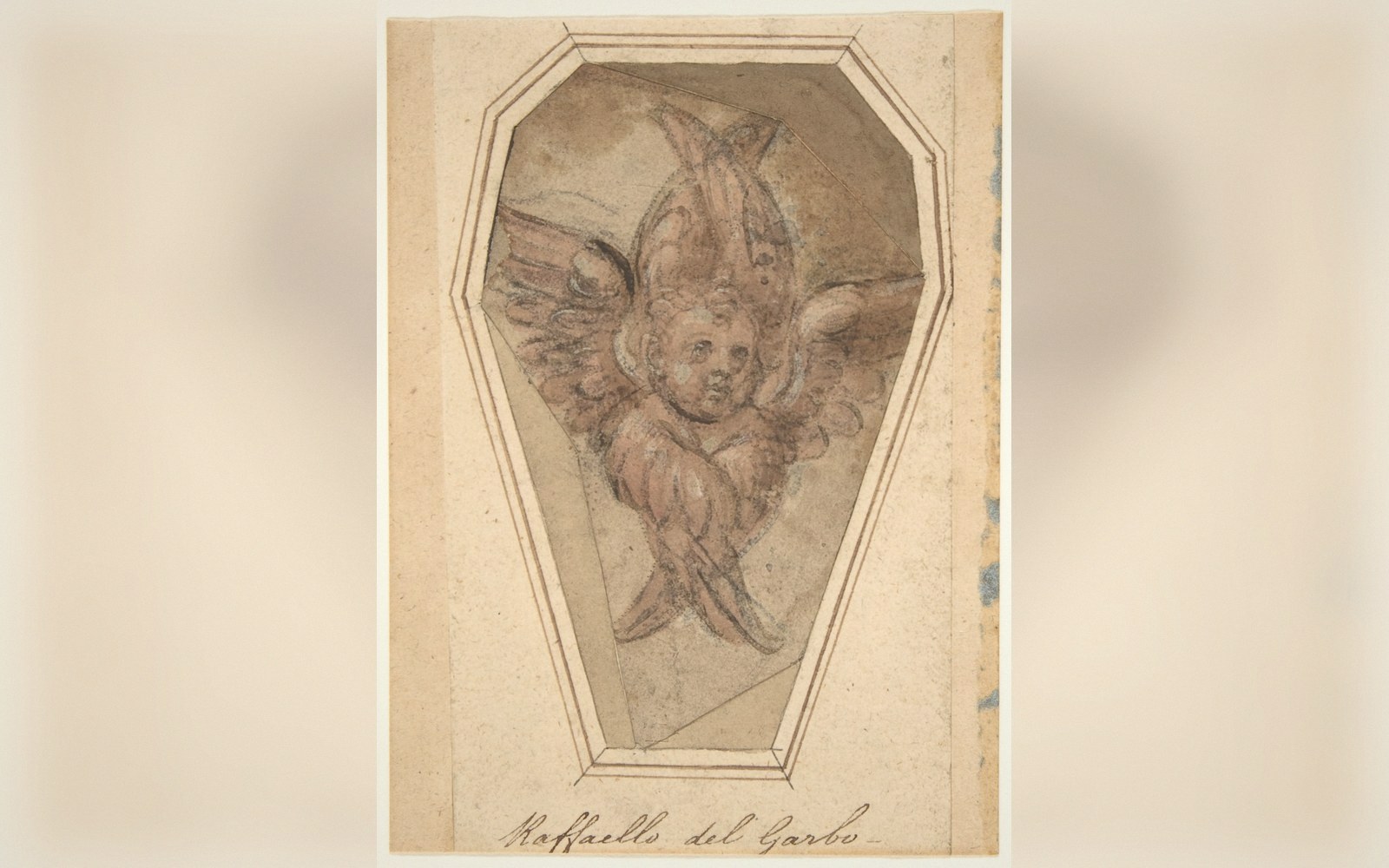
The transfer method was simple and reliable. A craftsman pricked small holes along every significant line of the drawing, following contours of faces, hands, drapery folds, and architectural edges. He then held the pricked sheet against the prepared surface — wet plaster, gessoed panel, or canvas — and dusted a cloth bag of powdered charcoal, called a pounce, across it. The dust passed through the holes and left a dotted outline on the surface beneath. Connect the dots, begin painting.
The practical consequence was repeatability. A workshop that had invested time in a well-resolved cartoon could use it more than once. The same Virgin and Child composition could be transferred to multiple panels, adjusted in scale, reversed, or combined with different backgrounds. This was not laziness or shortcut; it was inventory management. Patterns were worth keeping.
In fresco, the cartoon served a slightly different function because the pressure of time was different. The plaster was mixed and laid in sections — each giornata, or day's work, was a discrete patch of fresh surface that had to be painted before it set. Getting the composition correctly positioned from the start mattered enormously, and the cartoon gave the painter a fixed reference independent of memory or freehand redrawing. Some workshops transferred the outline rapidly in charcoal, then incised the main lines with a stylus directly into the soft plaster — a groove that would remain visible under paint and guide the brush.
The division of labour that cartoons enabled shaped the hierarchy of workshop practice. The master resolved the design; assistants executed the transfer. Which parts the master was then expected to paint himself was sometimes specified in the contract, but the mechanically transferred outline made it easier for an assistant to paint more than agreed, and harder to detect when one did. The cartoon flattened authorship at the moment of transfer: what passed through the holes was a dot pattern, not a personality.
Surviving cartoons are rare. Paper is fragile and pricking degrades the sheet; most were worked to destruction, having served their purpose. What survives instead is the evidence on the surface — the charcoal ghosts, the incised lines, the faint dotted trails visible in raking light on panels that have lost some of their paint layer. The cartoon itself disappeared. The geometry it made possible did not.
In fresco, the cartoon served a slightly different function because the pressure of time was different.