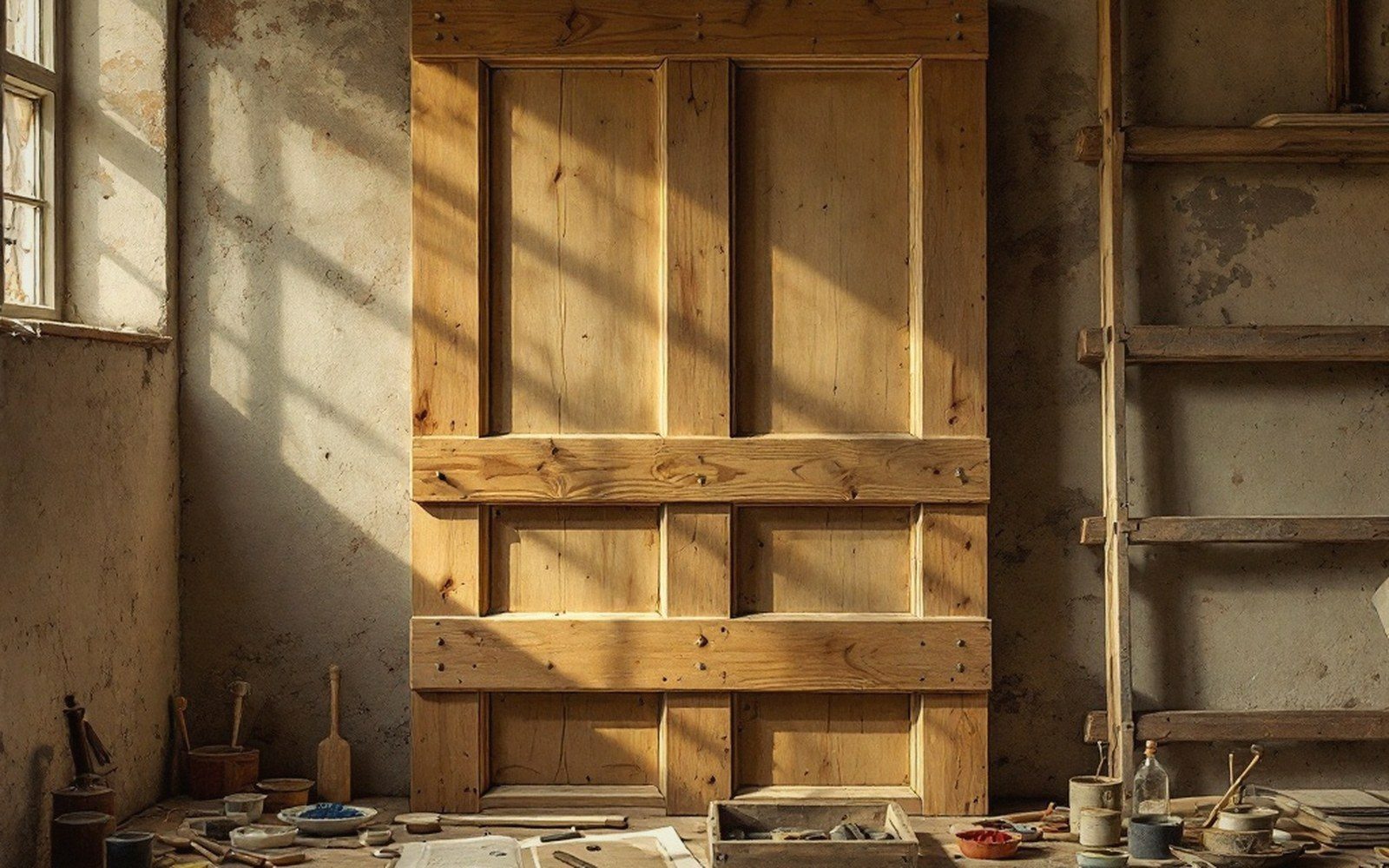
A wooden panel is a joinery product. Before a painter ever touched it, a carpenter had already shaped and joined it, and in many documented cases the frame was assembled before the support — the structure that would hold the picture determined the dimensions of the picture, not the other way round.
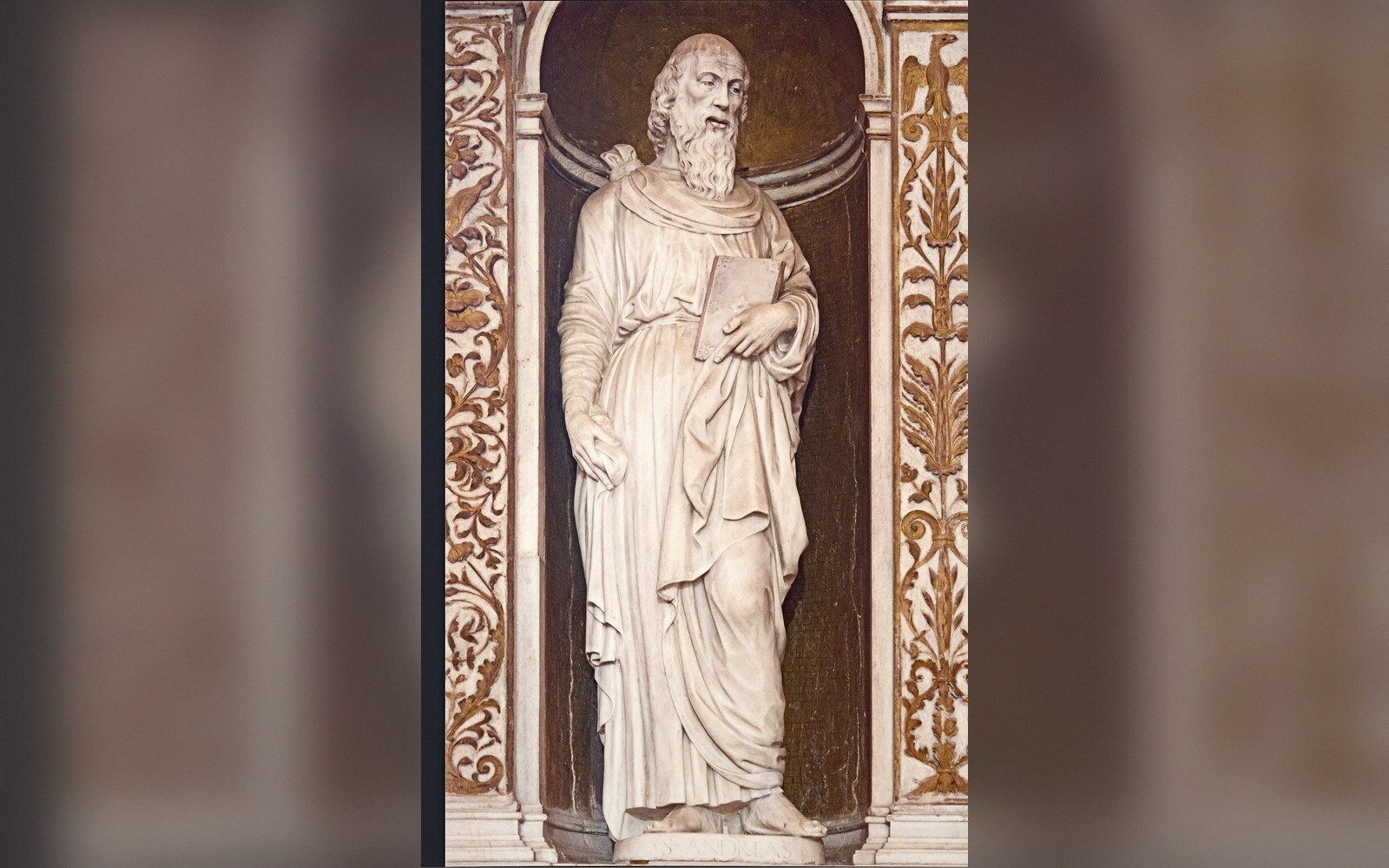
In Italian workshop practice, the legnaiolo (carpenter) was a distinct professional, not a painter's assistant with a saw. Contracts often name the carpenter separately or specify that the patron would supply the panel already made, removing that cost from the painter's fee entirely. Where the painter was responsible for commissioning the woodwork, the expense appears in accounts as a discrete line. The panel was not a given; it was a procurement.
The construction logic mattered enormously to what would survive. A large altarpiece required planks glued edge-to-edge and reinforced on the back with horizontal cradles — cross-battens, sometimes fixed, sometimes floating in a channel to allow seasonal movement — or with diagonal struts. Neither solution is perfect: fixed cradles fight the wood's expansion and contraction across the grain, and splits along the glue lines are the predictable result. Painters worked on panels already primed with gesso (a mixture of calcium sulphate and animal glue), applied in multiple coats and sanded smooth, and the gesso layer has no tolerance for movement at all.
The frame's priority over the painting is easy to miss when both survive together, but the carpentry often reveals it. Elaborate gilded frames with their engaged columns and carved pediments were structural as well as decorative: they defined the arched or rectangular fields the painter would fill, and the pala (altarpiece) was designed within those constraints. Changing the iconographic programme could require renegotiating with the carpenter first.
Gold and paint were applied across frame and panel in one continuous campaign where the two were structurally unified — the joins between them tell conservators whether they were made together or assembled later. When altarpieces were later sawn apart for sale or redistribution, the cuts often followed those original joinery lines, which is why so many dispersed panels retain a ghost of their original framing in their profiles.
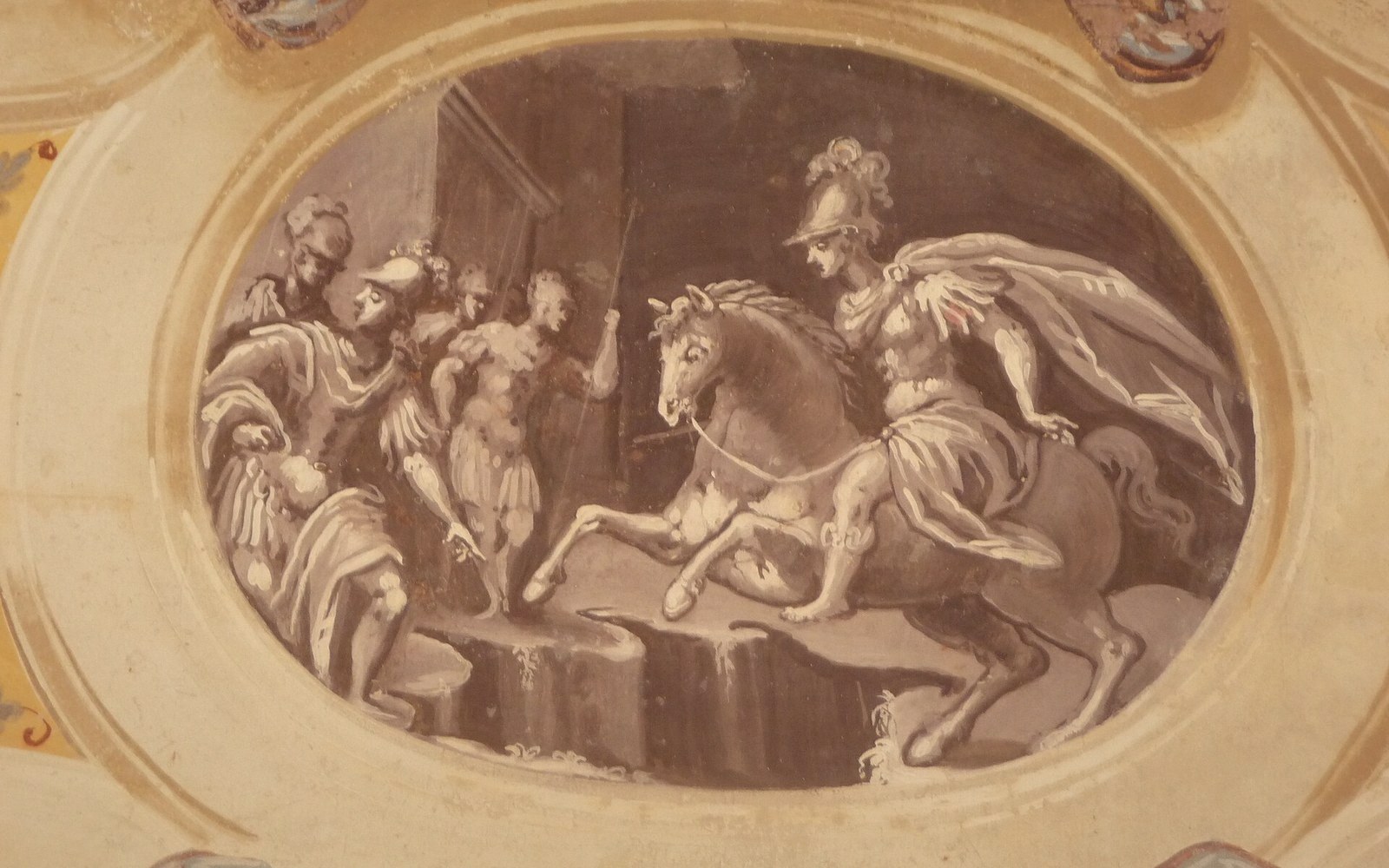
The painter inherited a manufactured object with its own tolerances, its own grain and, over time, its own intentions. Every crack that runs across a figure's face began, decades or centuries earlier, as a tree's response to moisture.
The frame's priority over the painting is easy to miss when both survive together, but the carpentry often reveals it.