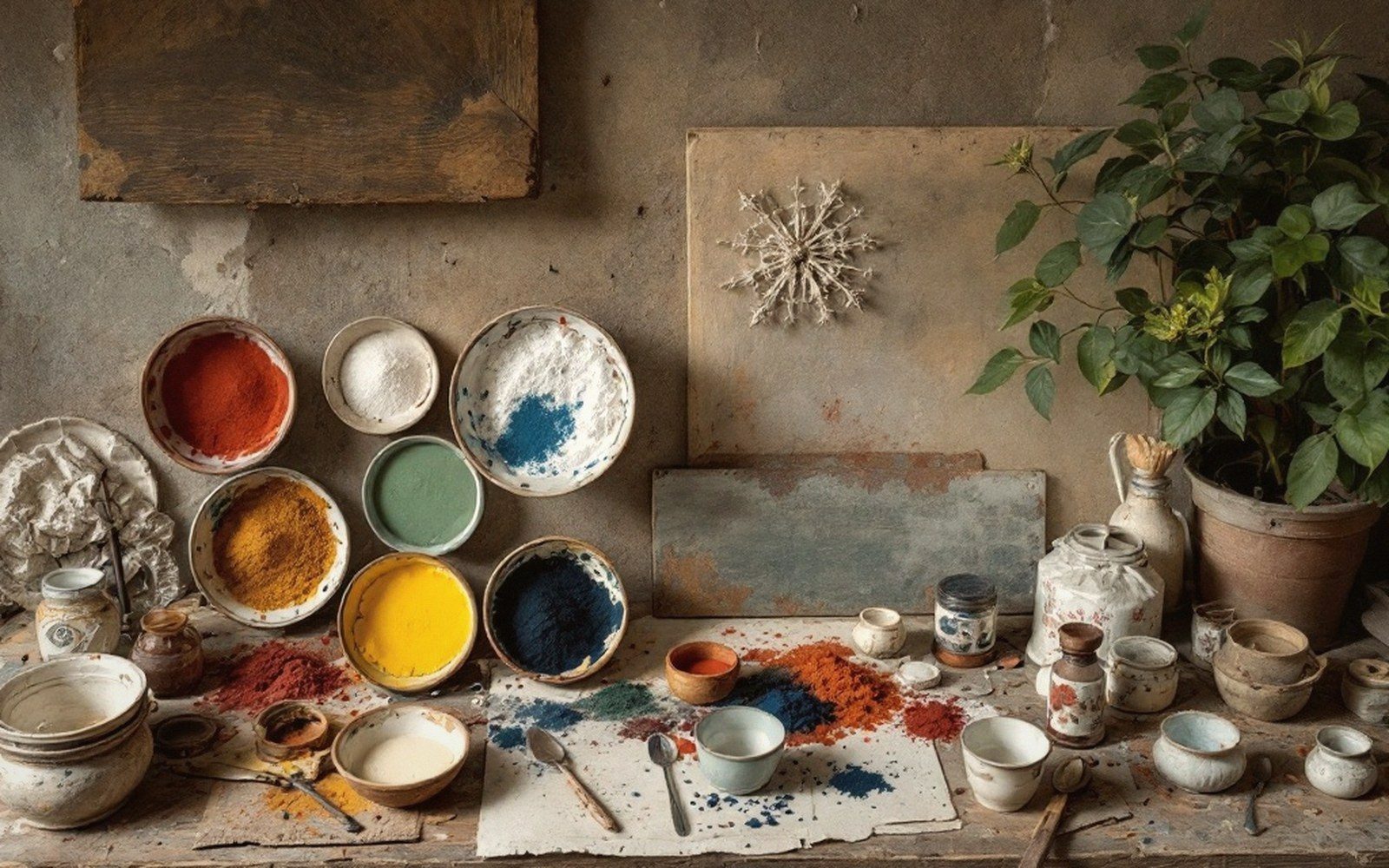
Egg yolk binds pigment by drying through oxidation and protein cross-linking: a thin, fast skin that sets within hours and cannot be reworked. Tempera — pigment ground into diluted yolk — demands a particular discipline. Each stroke is final. Depth is built through hatching, layer on parallel layer of semi-opaque marks, because the medium will not blend wet-into-wet. The luminosity admired in fourteenth- and fifteenth-century Florentine panel painting is an artefact of that constraint: light reaches a white gessoed ground and bounces back through stacked translucent films.
Oil is slower and it stays open. Linseed, walnut, poppy — each dries at a different rate, but all of them allow a painter to push wet pigment against wet pigment and watch the edges dissolve. Glazes can be built to depths that tempera cannot reach. A shadow can be a single fused layer rather than a scaffolding of hatched lines. The darker tonal range that oil permits — and the modelling it enables across skin, cloth, and sky — rewired what could be promised in a contract and what a patron could expect to receive.
The shift was not an overnight revolution. Fifteenth-century workshops in the Low Countries had already worked through its implications; Antonello da Messina, active in Sicily and then Venice in the 1470s, is one of the routes by which Flemish oil technique entered Italian practice. In the decades around 1500, mixed techniques were common: a tempera underlayer, oil glazes on top. The materials specified in a contract might name pigments without naming a binder at all, leaving that decision inside the workshop.
What the change ultimately cost was speed. An oil altarpiece demanded more elapsed time — glazing layers had to cure between applications. Patrons who had written penalty clauses into agreements were contracting, unknowingly or otherwise, against a medium that could not be rushed without visible damage. The painter who wanted to exploit oil's full depth was structurally in tension with the deadline enforced by penalty. The binder changed the image; it also changed the schedule.